Why teaching young learners requires a different approach
Teaching young learners requires much more than simply adapting an adult lesson for a younger age group. Children and teenagers need movement, variety, routines, creativity, and carefully chosen activities that help them stay engaged while still making meaningful progress. For teachers, this can be especially challenging in online lessons or one-to-one settings, where the usual classroom tools may not be available.
Our recent online Teaching Young Learners course at IH Budapest brought together teachers with different levels of experience to explore practical ways of teaching children and teenagers. Over five Friday afternoons, participants shared ideas, tried out games and activities, discussed classroom challenges and reflected on topics such as songs, task-based learning, safeguarding, disruptive behaviour and the use of AI in materials creation.
The reflection below, written by our course trainer, Sarah Graham Juhasz, gives an honest and practical insight into what teachers explored during the course and why these skills matter in today’s young learner classroom.
Quick summary
- Teaching young learners requires movement, variety, routines, and age-appropriate classroom management.
- Online lessons for children can be engaging when teachers adapt tools creatively, such as breakout rooms, virtual games, and collaborative tasks.
- Songs can support routines, listening practice, and language development in young learner classes.
- Safeguarding is an essential part of teaching children and teenagers, especially when teachers become trusted adults.
- AI can help teachers create engaging materials, but it should be used carefully, especially when working with children’s interests or personal information.
- A Teaching Young Learners course helps teachers share practical ideas, reflect on challenges, and build confidence.
Meet our trainer:
Sarah Graham Juhasz
Sarah holds a BA in International Relations from the US, a Master’s degree in Education and International Development from the UK and holds the Cambridge CELTA and DELTA qualifications from the Czech Republic.
She has lived and worked in multiple countries and continents (Czech Republic, Vietnam, Sri Lanka, Latvia, Tanzania, USA, UK, Hungary) as a teacher, trainer, examiner, education consultant and training coordinator in the field of NGOs.
Trainer reflection: What we explored in our Teaching Young Learners course
At IH Budapest, we just finished another successful online Teaching Young Learners course. A group of teachers, some with no classroom Young Learner experience, some with years of experience, met for five Friday afternoons to discuss games, activities, tasks, and tips for teaching students from 2 years old to 17 years old. We shared a lot of ideas and asked a lot of questions and played a lot of games!
What we covered
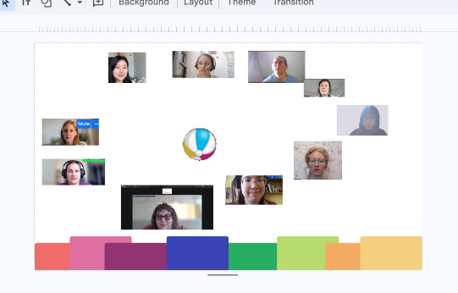
Throughout the course, we played games and did activities that provided some alternative ideas to doing activities in the coursebook. We manipulated the tools of the online environment to do activities that work in the face-to-face classroom too, like throwing a virtual beachball around the “room” or “mingling” around different breakout rooms to speak to multiple participants. Participants appreciated the mix of face-to-face ideas and online tips – many of the teachers work online with their Young Learners, so it’s important to add to the ideas of what they can use to keep kids engaged even when they’re not in the same room.
Young learners, movement and lesson planning
We also talked about the differences between young learners and adult learners and what that means for how we teach. It seems straightforward that adults can sit still, but young learners can’t. What does that mean when I’m trying to plan a 60 minute lesson for a group of 6 year olds? It means understanding that young students need to get up and move sometimes and you need to vary tasks and activities more frequently than you do with an adult group of learners. Maybe your reading task becomes a Running Dictation!
Songs, routines and classroom language practice
We talked about using songs as a tool in the classroom – to help set up routines (singing Tidy Up Time at the end of a lesson), to practice listening skills (putting images from a song in order) and to practice new language (complete the gaps with lyrics from the song).
Safeguarding in young learner teaching
A new aspect of the training for most participants was safeguarding. We discussed the role of the teacher as a confidante and close adult for their students. We have a responsibility to ensure the safety of all students in our care and we talked about what to do if a child shares something with you. This gave concrete steps for teachers who may not have considered this situation before.
AI and materials for young learners
We also discussed the use of AI in creating materials. This was just the tip of the iceberg but it highlighted how helpful some teachers find it in supporting their lesson planning and creating engaging activities that specifically match the interests of their students. Young Learner teachers should consider how much they want their students to generate and how much they share about their students. If you’re unsure, it’s worth talking to the parents and your Director of Studies if you have one.
Some highlights from the course
A task-based dream house activity
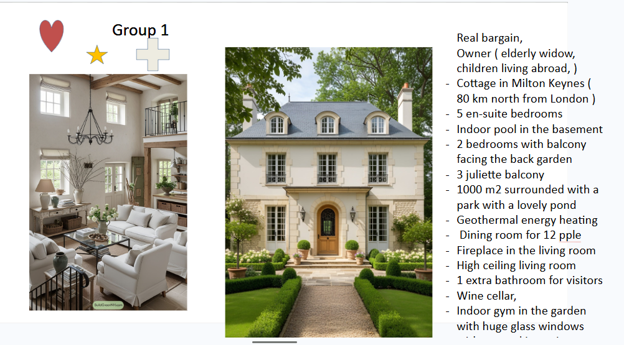
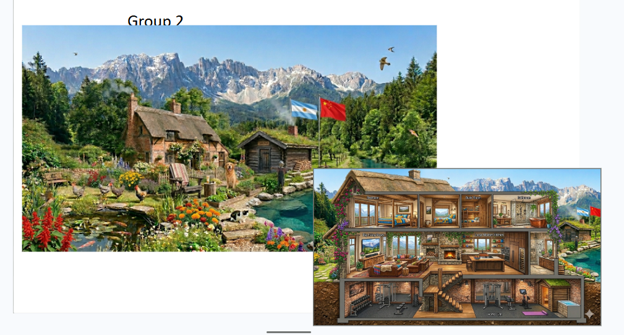
One highlight many participants mentioned was the task-based activity that integrated lots of language production and high levels of creativity. Participants worked together to revise some language to describe a house and then built their dream house, some using AI to generate a specific image. Participants became the real estate agent, selling their dream home to the other participants. We analysed how this manipulated the task cycle and how it could be extended over several lessons to keep students engaged and recycling everyday, useful language.
Managing disruptive behaviour constructively
Another highlight was brainstorming how to deal with teachers’ “worst nightmare” or disruptive behavior in the classroom. Every teacher can remember an experience that they wish they had handled differently or felt ill-equipped to address. We talked through different approaches and there were lots of helpful ideas to help the student re-integrate and keep the lesson on track.
Reflections from the trainer
Participants described this as a workshop – there weren’t many “right” or “wrong” answers and we all shared ideas about what works in the classroom based on our experience, our teaching style, and our group of learners. This meant there was a lot for everyone to gain from working together, even experienced teachers got ideas for new games and activities and teachers with little or no experience got a flavor of what they can expect as they prepare to teach one-to-one or groups of young learners.
It was really interesting to see how participants were using AI to enhance their materials but also tap into their learners’ interests to make lessons more fun and engaging. Another adaptation I really liked learning about was how one teacher adapted her materials by getting students to draw a better picture to match the text from the coursebook which required them to demonstrate comprehension of the reading. I also loved seeing Disney characters instead of the unknown “characters” from the coursebook.
As the trainer, it was great to hear how teachers were creating engaging activities that worked in their online environments or for one-to-one lessons. Many of the trainees work with private students, so don’t have access to the same classroom resources or dedicated person to choose coursebooks that you would have at a language school. This reflects how more teachers are working, with young learners and adults. This requires different skills, like designing a curriculum or developing needs analysis tools which some teachers don’t begin to feel confident doing until after doing a DELTA qualification. As this need is increasing, courses should consider how to address this.
Key takeaways for teachers
Teaching young learners is active, creative and highly responsive to the needs of the group. The most effective lessons often combine structure with flexibility: clear routines, varied tasks, movement, songs, games and opportunities for real communication.
For teachers, one of the most important messages is that there is rarely one perfect answer. What works depends on the age of the learners, the teaching context, the lesson aims and the teacher’s own style. Sharing ideas with other teachers can be just as valuable as learning a new activity, because it helps teachers reflect on their choices and adapt them more confidently.
The course also highlights how young learner teaching is changing. More teachers now work online or with private students, which means they may need to design materials, adapt coursebooks, use digital tools, create needs analyses and make careful decisions about AI and safeguarding.
FAQ: Teaching Young Learners
What is a Teaching Young Learners course?
A Teaching Young Learners course helps teachers develop practical skills for teaching children and teenagers. It usually focuses on age-appropriate activities, classroom management, lesson planning, motivation, routines, language practice and adapting materials for younger learners.
How is teaching young learners different from teaching adults?
Young learners usually need more movement, shorter tasks, clearer routines and more frequent changes of activity. They may also respond better to songs, games, stories, visuals and task-based activities than to long explanations or extended individual work.
What activities work well for young learners?
Effective activities often include movement, creativity, repetition and meaningful language use. Examples include running dictations, songs, picture ordering tasks, role plays, games, information gap activities and collaborative projects.
How can teachers keep young learners engaged online?
Online young learner lessons work best when teachers use variety and interaction. Breakout rooms, virtual objects, short games, drawing tasks, songs, movement breaks and personalised activities can help children stay active and involved.
Why is safeguarding important in young learner teaching?
Teachers working with children and teenagers have a responsibility to create a safe learning environment. Safeguarding helps teachers understand appropriate boundaries, how to respond if a child shares a concern and when to speak to a senior colleague or designated safeguarding lead.
Can teachers use AI when preparing lessons for young learners?
AI can support lesson planning and materials creation, especially when teachers want to personalise activities. However, teachers should be careful about what information they share, how much students generate and whether parents or a Director of Studies should be consulted.
Who is a Teaching Young Learners course suitable for?
It is suitable for teachers who are new to young learner teaching, experienced teachers looking for fresh ideas, online teachers, freelance teachers and teachers preparing to work with children or teenagers in one-to-one or group settings.
Continue developing your Young Learner teaching skills
Teaching children and teenagers can be one of the most rewarding areas of language teaching, but it also brings its own challenges. Teachers need practical ideas, confidence, flexibility and a clear understanding of how young learners think, move, interact and learn.
At IH Budapest, our teacher training courses are designed to give teachers space to try out activities, share experience, ask questions and reflect on real classroom situations. If you are preparing to teach young learners, moving into online teaching, or simply looking for fresh ideas, a practical training course can help you build your confidence and expand your teaching toolkit.